
An in-depth guide for bonsai lovers, beginners, and indoor gardeners
Bonsai evokes images of graceful, miniature trees pruned carefully, shaped with wire, displayed in shallow pots. Many bonsai enthusiasts dream of having a little forest on their windowsill or coffee table. But not all bonsai are suited to life indoors. In this article, we’ll explore which bonsai species are good for indoor cultivation, what special care they require, and how to maximize their health in the indoor environment.
Introduction: The Indoor vs Outdoor Bonsai Dilemma
One of the most common misconceptions is that all bonsai can be grown indoors. In fact, many bonsai species are temperate trees that naturally require strong seasonal changes cold winters, fluctuating light, dormancy periods which are difficult to replicate indoors. These species typically do much better outdoors, where they can follow their natural cycle.
Indoor bonsai are essentially a niche: only tropical or subtropical species (or very tolerant species) truly thrive indoors under stable, warm, controlled conditions.
Thus, when we talk about bonsai that are good for growing indoors, we’re really limiting the field to species that:
- Tolerate relatively constant temperatures (no deep winter cold)
- Can cope with lower light levels (or be supplemented with artificial light)
- Can survive lower humidity typical in indoor settings
- Are forgiving and resilient (so mistakes don’t kill them instantly)
In the rest of this article, we’ll first look at a set of bonsai species that are relatively well suited for indoor life, then dig into the challenges and care practices, and finally share tips for success and troubleshooting.
Bonsai Species That Do Well Indoors (or Can Be Grown Indoors)
Below are several bonsai species often recommended for indoor cultivation. Some do better than others, and some may require supplemental lighting or careful humidity control. But each has proven itself in many indoor bonsai collections.
| Species | Key Strengths Indoors | Challenges / Notes |
|---|---|---|
| Ficus (e.g. Ficus retusa, Ficus benjamina, Ficus microcarpa “ginseng”) | Probably the most popular indoor bonsai. Tolerant of lower humidity, forgiving of watering mistakes, good branch ramification. | Needs good light, occasional pruning. Sensitive to cold drafts. |
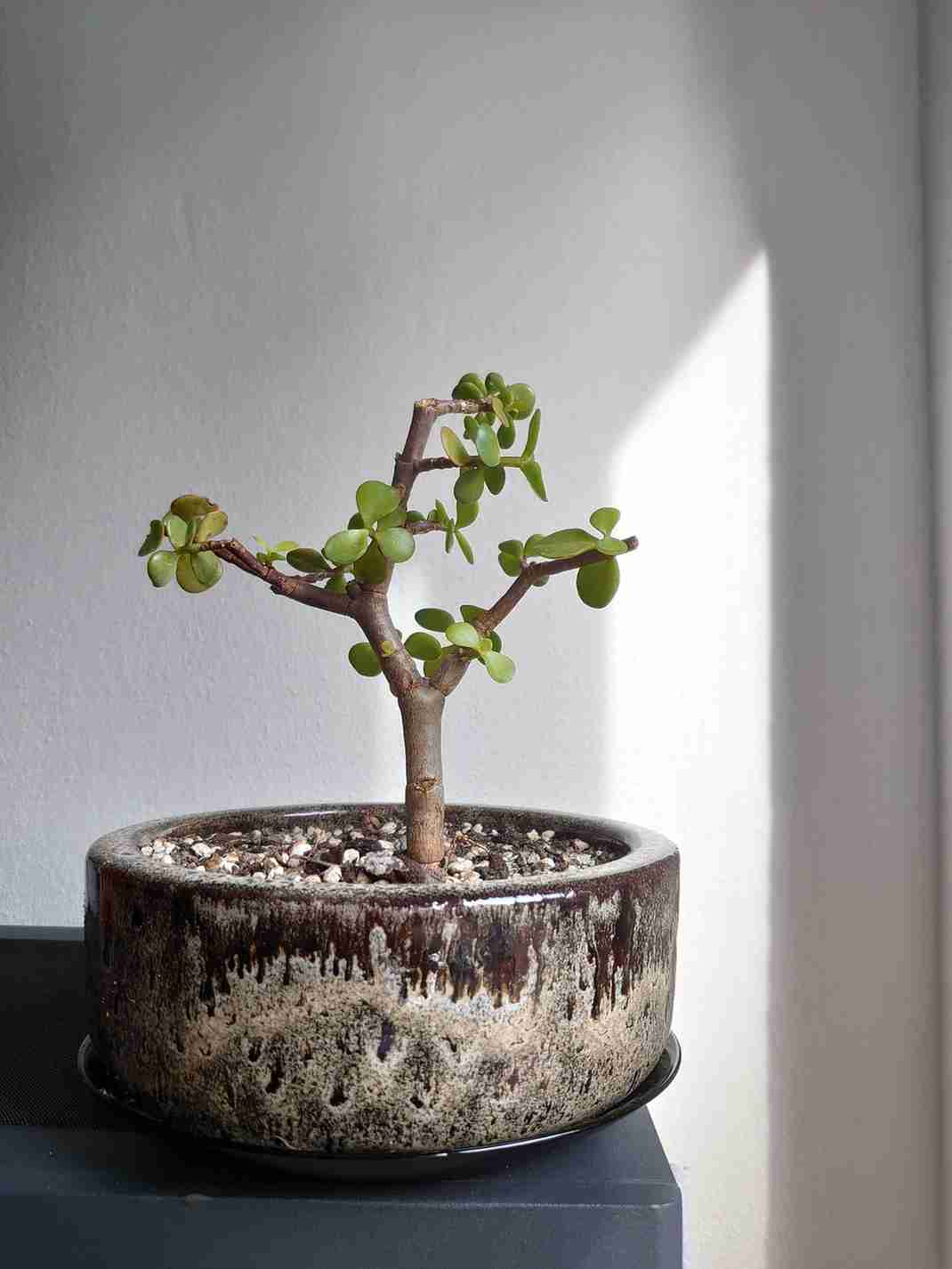
| Dwarf Jade (Portulacaria afra, often called “mini jade”) | Succulent-like, so it tolerates periods of dryness. Needs bright light. | In low light, growth is very slow; may drop leaves if overwatered. |
| Fukien Tea (Carmona microphylla) | Has small leaves, produces tiny white blossoms, and can be shaped in bonsai form. | Sensitive to stress, may drop leaves when conditions change. |
| Schefflera (Hawaiian umbrella tree, Schefflera actinophylla or related) | Some varieties adapt well to indoor bonsai cultivation. | Requires bright light; may stretch (leggy growth) if light is poor. |
| Sweet Plum (Sageretia theezans / Sageretia spp.) | Small leaves, nice bark, fairly hardy for indoor conditions. | Still needs good light and consistent care. |
| Chinese Elm (Ulmus parvifolia) | Though often used outdoors, many growers adapt Chinese Elm indoors in bright conditions. | It’s borderline it may suffer in low light; better as a “bring-inside-in-winter” tree. |
| Other possibilities | – Serissa (“Tree of a Thousand Stars”) — small leaves, delicate flowers. – Syzygium / Eugenia (some fruiting evergreens) – Citrus bonsai (e.g. kumquat, calamondin) in very bright, warm indoor environments – Crassula / succulent bonsai species such as Crassula sarcocaulis. | These tend to be more specialized, more sensitive to inadequate light or humidity changes. |
It’s worth noting that many bonsai websites emphasize that Ficus is the most robust indoor option, while other species are “more specialized.” Also, some community forums caution that maintaining truly healthy, growing bonsai indoors is difficult, and light is often the limiting factor.
Thus: while these species can be grown indoors, your success will depend heavily on replicating light and humidity conditions.
Challenges & Considerations of Indoor Bonsai Cultivation
To succeed with indoor bonsai, you must address several inherent challenges. Below are the main hurdles and strategies to overcome them.
1. Light Intensity & Duration
Indoors, the light intensity that reaches most living spaces is dramatically lower than what plants receive outdoors. Even a south-facing window often provides insufficient lux (illumination) for bonsai to thrive.
- Solution: Place your bonsai as close as possible to the brightest window (south or west-facing).
- Supplemental lighting: Use LED grow lights or fluorescent full-spectrum lamps for 8–12 hours per day to compensate, especially during darker months. Many bonsai growers rely on supplemental light to maintain branch growth and leaf health.
- Light monitoring: Consider using a light meter to ensure > 500 lux or more — some sources suggest indoor bonsai cultivation may require even higher light levels.
If light is insufficient, the bonsai may survive in a weakened state but won’t respond well to pruning or styling — new shoots may not emerge.
2. Humidity (Moisture in the Air)
Homes, particularly during winter heating or air conditioning, tend to be quite dry. This is hard on bonsai, which generally prefer higher humidity.
- Humidity tray: Place the pot on a tray filled with water and pebbles. As the water evaporates, local humidity increases around the tree.
- Misting / fogging: Mist leaves regularly, but do not overdo — wet leaf surfaces for prolonged periods may invite fungal issues.
- Room humidifier: In very dry homes, a small humidifier can help provide ambient moisture to mitigate dryness stress.
Helpfull Tip:
The evaporating water raises local humidity. “A simple humidity tray like this Pinkunn 2 Pcs Bonsai Humidity Tray on amazone helps maintain moisture around your tree between waterings while protecting surfaces beneath.”
3. Watering & Soil Considerations
Because bonsai are in shallow pots, their soil volume is limited. This means the soil will dry faster and nutrients deplete quicker, demanding more attentive water management.
- No fixed schedule: Do not water “once every three days.” Instead, monitor soil moisture — water when the topsoil begins to dry.
- Drainage: Use a well-draining bonsai substrate (mixes with akadama, pumice, lava rock, or coarse grit) to prevent root rot.
- Consistent moisture: Indoors, the soil may dry unevenly depending on airflow; rotate and check all sides of the pot.
- Fertilizing: Because indoor bonsai grow slower, you may reduce fertilizer strength, but regular feeding (during growth periods) is necessary to replenish nutrients lost to frequent watering.
4. Temperature & Airflow
Indoors, temperature is more stable (which is good), but extremes or drafts (cold windows, heating vents, air conditioners) can stress the bonsai.
- Keep it away from drafty windows or heat vents.
- Maintain a daytime range ideally between ~18–25 °C (64–77 °F), without drastic swings.
- Provide gentle airflow stagnant air can cause fungal problems, but windy blasts or hot air drafts should be avoided.
5. Dormancy & Seasonal Rhythm
Many bonsai species (especially temperate ones) require a cold period to enter dormancy; indoors you lose that natural rhythm.
- For truly indoor species (tropical/subtropical), this is less of a concern.
- If you have species that need dormancy, you may need to relocate them outdoors in winter or simulate a “cool period” indoors (cool but not freezing).
- Because of this limitation, many bonsai growers ultimately use indoor cultivation only temporarily (e.g., for display), moving species outdoors when possible.
6. Stress from Environmental Change
Indoor bonsai can be highly sensitive to changes — relocation, sudden shifts in humidity, or light, can trigger leaf drop or shock.
- Be gradual when introducing new conditions (e.g. new grow light, moved window).
- Monitor for signs of stress: leaf yellowing, dropping, stunted growth.
How to Choose the Right Indoor Bonsai for You
Selecting a species is just the start. Here are some decision-criteria and tips to help you choose the best match:
- Your lighting conditions
If your space has very bright light (large windows, glass walls, lots of days with sun), you can choose “higher demand” species. If light is moderate, choose forgiving ones like Ficus or dwarf jade. - Your tolerance for maintenance
Some species (like Fukien Tea or Serissa) can be temperamental. If you want low stress, start with Ficus or succulent-types. - Growth form and aesthetics
Some species flower (Fukien Tea) or fruit (citrus bonsai). If you like blossoms or mini fruit, choose accordingly — but be ready for extra light & care. - Availability and sourcing
Some species are easier to get in your region. Starting with a locally available bonsai often gives you better success (less acclimation shock). - Long-term plan
Decide whether you want a permanently indoor bonsai, or one that you display inside but keep outdoors part of the year. That decision influences species choice.
Step-by-Step: Getting Your Indoor Bonsai Setup Right
Here’s a practical workflow to set up and maintain an indoor bonsai that thrives.
Step 1: Provision of Light
- Place near a bright window.
- Install full-spectrum LED grow lights, ideally ~30–60 cm above the canopy.
- Provide 8–12 hours of “daylight.” Use timers if needed.
Step 2: Potting & Soil
- Use a shallow bonsai pot with drainage holes.
- Fill with a mix of components that allow drainage and air (e.g. 50% pumice/lava rock, 25% akadama, 25% organic material or inert filler).
- Repot every 2–3 years (or when roots are encroaching) to refresh soil and prune roots.
Step 3: Watering
- Check soil moisture daily (or every other day).
- Water thoroughly until water drains out the bottom.
- Avoid overwatering (roots sitting in soggy soil) and underwatering (letting soil dry too much).
- In winter, when growth slows, reduce watering slightly.
Step 4: Humidity & Microclimate
- Use a humidity tray filled with water and pebbles.
- Mist leaves in morning or evening (avoid wetting in mid-day sunlight).
- In drier climates, run a room humidifier or keep nearby humidity booster.
Step 5: Temperature & Protection
- Keep temperature stable; avoid placing near drafts or heating vents.
- In summer, ensure ventilation but avoid hot air blowing on foliage.
Step 6: Pruning & Wiring
- Trim new growth to maintain shape.
- Use bonsai wire (aluminum, annealed copper) carefully to train branches.
- Always monitor wire deeply, as indoor trees have slower growth remove wire before it cuts into bark.
Step 7: Fertilizing
- Use a balanced bonsai fertilizer (e.g. NPK 10-10-10 or similar) during growth periods.
- For species that grow slower indoors, reduce the fertilizer strength (e.g. half strength).
- Pause fertilization in very slow growth or low light periods.
Step 8: Monitoring & Adjusting
- Watch for signs of deficiency (yellow leaves, slow growth).
- Adjust light, watering, and humidity as needed.
- Rotate the tree periodically so all sides receive light.
Success Tips & Common Pitfalls
Tips for Success
- Start simple: Use a resilient species like Ficus or dwarf jade as your first indoor bonsai.
- Be patient: Indoor bonsai growth is slower don’t over-prune early.
- Gradual changes: Avoid abrupt shifts in environment (light, humidity, position).
- Record keeping: Keep a log of watering, fertilizing, environmental changes this helps diagnose problems later.
- Observe closely: Catch leaf discoloration, pests, or root issues early.
- Ventilation: Occasional fresh air (open a window nearby) can help reduce fungal issues and stagnation.
Common Pitfalls & How to Avoid Them
| Problem | Cause | Solution |
|---|---|---|
| Leaf drop / leaf yellowing | Change in light, humidity stress, poor watering balance | Reassess recent changes; move to brighter spot; adjust watering/humidity |
| Weak growth, no new shoots | Insufficient light or nutrient deficiency | Increase light or supplement with grow lights; fertilize appropriately |
| Root rot / fungal issues | Overwatering, poor drainage, stagnant soil | Ensure proper drainage, reduce watering, rest soil dry a bit, repot with fresher soil |
| Wire cutting into bark | Growth slower indoors but wire left too long | Check wires often and remove before damage |
| Pest infestation (e.g. scale, mites) | Indoor humidity and plant stress can invite pests | Inspect regularly, treat early, isolate infested plant |
| Leggy growth | Too little light, stretching toward light source | Increase light, reposition, maybe add supplemental lighting |
Indoor Bonsai Species Gallery & Suggestions (with Examples)
While we already listed several species earlier, here are a few interesting examples along with notes:
- Ficus retusa / Ficus benjamina classic indoor bonsai, tolerant and forgiving.
- Ficus microcarpa “ginseng” the thick aerial-rooted cultivar often sold as bonsai indoors.
- Dwarf Jade (Portulacaria afra) succulent-like, tolerates dryness, but thrives under bright sun.
- Fukien Tea (Carmona microphylla) pretty leaves and flowers, more susceptible to stress.
- Serissa foetida (“Tree of a Thousand Stars”) fine leaves and small white star-shaped flowers.
- Syzygium / Eugenia small-leaved, flowering or fruiting indoor evergreens (in very good lighting).
- Citrus bonsai (e.g. calamondin, kumquat) if you can provide strong light and warm conditions, you may even get blossoms and fruits.
- Crassula sarcocaulis a succulent bonsai-type species often used in indoor bonsai setups.
When possible, start with multiple small specimens, see which ones respond best to your home environment, and gradually focus on those.
When Indoor Isn’t Enough Hybrid Strategy
Even the best indoor bonsai may benefit from occasional outdoor exposure (when weather allows). Many bonsai enthusiasts adopt a hybrid approach:
- Display indoors, grow outdoors: keep the bonsai inside for display periods, but move it outdoors (in a protected position) for stronger light, airflow, and seasonal variation.
- Seasonal swap: some indoor species may produce stronger growth, better immunity, and more vigor when given some time outdoors during spring/summer.
- Lighting experiments: compare different rooms, windows, or supplemental lighting setups to see which best supports your tree.
This hybrid strategy often yields better long-term health than strictly indoor cultivation.
Summary & Final Advice
Growing bonsai indoors is challenging, but deeply rewarding if done well. To recap:
- Only a limited set of species are truly suited to indoor life (tropical, tolerant species).
- The dominant challenge is light supplement as needed.
- Watch humidity, watering, soil, and avoid environmental shocks.
- Start with forgiving species like Ficus or dwarf jade, and iterate your setup.
- Monitor closely, adapt, and accept that growth may be slower indoors.
- If possible, integrate outdoor exposure where your climate allows.
If you persevere, your indoor bonsai can become a miniature, living sculpture that brings serenity and joy to your interior space.
Mexico City is a culinary playground, and my stomach has never been happier or more challenged. From high-end restaurants to street-side stalls, every meal felt like a revelation. I came expecting tacos and tequila; I left with a deeper appreciation for mole, tamales, and the endless creativity of Mexican chefs.
My favorite find? Tacos al pastor from a vendor near Parque México. Perfectly spiced pork, carved off a spinning spit, topped with pineapple and cilantro, all for under a dollar. Then there was the unexpected elegance of huitlacoche (corn fungus) served in a gourmet quesadilla at a fusion restaurant in Roma Norte. It tasted like truffles and history.
I took a food tour that introduced me to dishes I’d never heard of: tlayudas, tlacoyos, and a soul-warming pozole made with hominy and pork. Every vendor had a story, and many had been perfecting their craft for generations. Even the street corn, grilled and smothered in mayo, cheese, and chili powder, felt like a revelation.
If you love food, put Mexico City at the top of your list. It’s not just about taste—it’s about culture, memory, and pride. I’ll never eat a taco the same way again.
Sources
- The Spruce – How to Care for a Bonsai Tree
- Royal Horticultural Society (RHS) – Bonsai Tree Care
- Gardening Know How – Growing Bonsai Indoors
- National Bonsai Foundation – Resources & Education